In the first of a two-part series examining how God calls us to service, Todd shares a reflection from 1 Samuel that recounts the call of the prophet who would anoint the first two kings of Israel. As you listen to the episode, consider how God may be reaching out to you.
This compilation of the Christmas story takes the accounts from Matthew, Mark and Luke — framed in the concept of light coming into the world from John — to tell the story of the birth of Jesus.
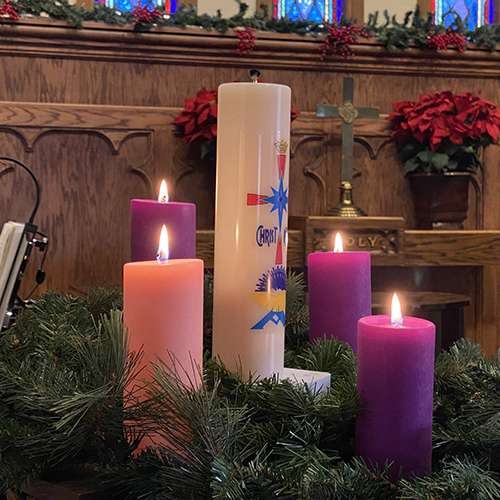
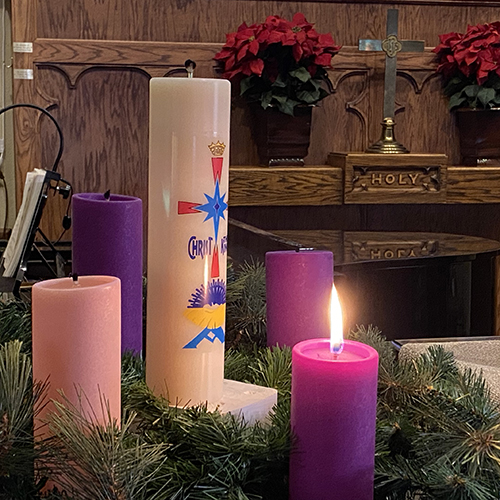
In this fourth week of Advent, Todd continues to explore the themes of each week’s candle. This week we light the candle of love. See how Jesus showed love to others and, particularly, to all of us through his sacrifice on the cross.
We often think of joy as a feeling we have after a fun activity or an emotion to be felt when we’re among loved ones. But Jesus explained that joy is something much deeper than that. It’s a state of being, an enduring trait. Jesus explains how we find joy and how we maintain it, even amid difficult circumstances.
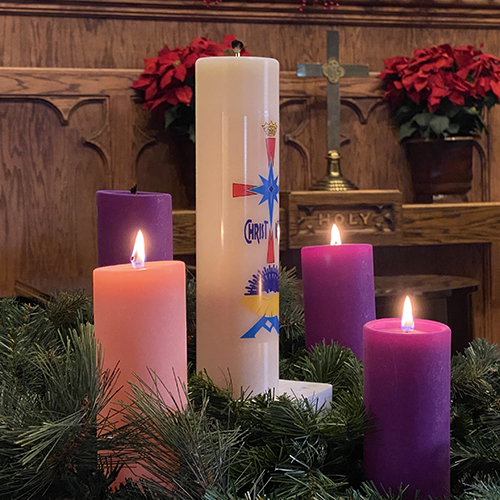
In this second episode in a special series during Advent, we explore how Jesus gave us the gift of His inner peace and how that has three very real impacts on our lives. May you embrace inner peace as you listen to this episode.
We celebrate the coming of the Christ child during Advent, but we sometimes forget to celebrate why Jesus came to earth in the first place. Many Christians recognize that He came to provide for our salvation and reconciliation with God. This holiday season, let’s embrace Jesus’ mission, and recognize that because of Jesus’ arrival as a baby, we have hope.
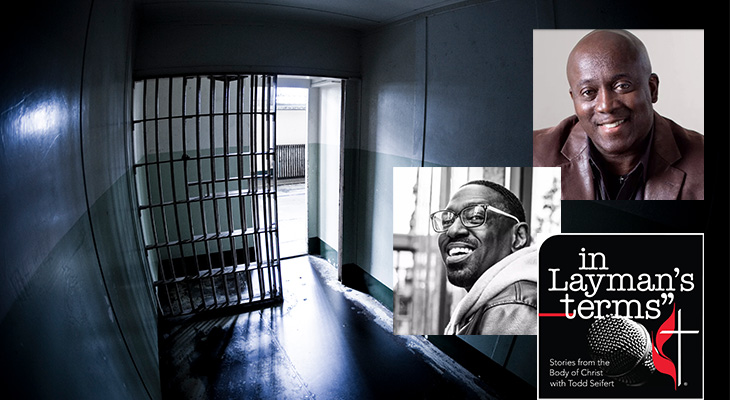
Darryl Burton, a newly ordained elder in The United Methodist Church sat in prison for 24 years. Lamont McIntyre sat in prison for 23 years. Neither man actually committed the murders for which they were accused.
A ministry in New Jersey helped exonerate them, but there was no assistance to help them reacclimate to society. So the two men joined forces in 2018 and launched Miracle of Innocence, a ministry meant to help innocent people find justice and regain their freedom, and then receive the help that Darryl and Lamont didn’t have available to them.
You can help by taking part in a gala at 7 p.m. Oct. 28, 2020. Find out how by going to the organization’s website at www.miracleofinnocence.org.
Hear their stories and learn more about this important ministry in the latest episode of the “In Layman’s Terms” podcast.
In October 1990, a relatively small group of people met for worship for the first time — in a funeral home. With a name that was somewhat tongue-in-cheek because of its location but also a theological statement because of its dedication to Jesus Christ, United Methodist Church of the Resurrection was born.
The congregation made a pitstop at an elementary school before settling in the first of what is now a five-campus church in Leawood, Kansas, campus. Led by a then 25-year-old pastor and now world-renowned author, Rev. Adam Hamilton, from that humble beginning started a congregation that is now the largest in the entire denomination.
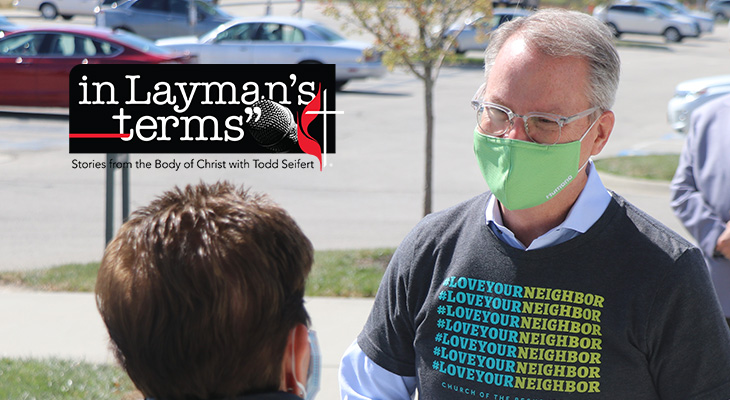
The congregation is celebrating its 30th anniversary in October 2020, so Hamilton and a few leaders in the congregation sat down with Todd Seifert for a new episode of the “In Layman’s Terms” podcast.
The worship team at St. Paul’s United Methodist Church in Papillion, Nebraska, missed its choir. Like so many others, the church had to cancel choir amid the COVID-19 pandemic. But a group of lay people and the church’s pastor worked together to figure out how to create a virtual choir. Now, with three songs under their belt, the people responsible talk to Todd to share what they learned as they took the journey down the path of musical innovation.
In the third of a three-part series on class meetings, Todd explores how class meetings provided a model of growth and evangelism in the past and how they can be a sustainable force in the present. Bishop Ruben Saenz Jr. is the featured guest who shares a vision for how class meetings can sustain a United Methodist witness in smaller churches but also can bolster discipleship in larger congregations by enhancing spiritual disciplines and introducing accountability among believers.



 In Layman's Terms