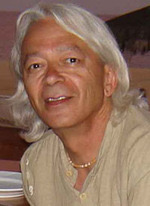
I got word late the night of May 8 that my friend, Ed Kociela, had died of injuries from a freak accident at home down in his adopted home of San Felipe, Baja California.
Ed thought of that place as paradise, and based on the pictures I saw posted on Facebook from him and Cara, I understand why.
My first recollection of Ed was during my interview to become the editor of The Spectrum & Daily News in St. George, Utah. Ed held the title of senior writer then in the Cedar City bureau, and his task that day was to drive me around in his pickup to introduce me to that part of the coverage area.
He drove me through the town, told me all about the Utah Shakespearean Festival, took me through Parowan and, eventually, his beloved Enoch. He told me he loved living there because it was outside the city and it felt like he had room to roam. He educated me on the culture and gave great advice for a newcomer to Southern Utah.
Ed wrote a column some Cedar City Daily News readers will remember titled “High Country Beat.” It was a mishmash of local events and some quick commentary on tidbits of news happening in the area. And it gave Ed a real connection to the people.
He later served as my city editor, and from my time starting as editor in 2001 until Ed retired in 2011, we and our staff had, perhaps, the best run of journalism in the history of Southern Utah. We broke big stories, shared breaking news, had the chance to tell a lot of happy community stories, and generated a lot of discussion with an active opinion page. We won a ton (I don’t remember the actual number) of Associated Press awards for coverage, including two regional awards against the “big dogs” from Salt Lake City, Boise, and Washington state.
A lot of people thought Ed and I were polar opposites on politics. Some saw me as the center-right voice, but many saw Ed as the “pinko commie.” It was a badge he wore with honor, not because he really liked the idea of communism but because he saw it as his job to speak up for those who had little or no voice. But the reality was we both started in the center — at least by Southern Utah standards — and moved one way or the other based on our consciences at the time.
Because he sometimes spoke truth about circumstances of people not in the predominant culture, some people disliked him. But they didn’t see or interact regularly with the Ed that I knew.
Ed was the one who would ask, “what does that policy do to the family barely making ends meet?” He would ask about how we could be humane as a society to the immigrant.
Ed was the one who spoke up for veterans during editorial board meetings with elected officials in our St. George Boulevard conference room.
Ed was the one who would challenge lawmakers openly about protecting the rights of senior citizens and the disabled.
I saw Ed and Sen. Orrin Hatch, a Republican, have deep, respectful, meaningful debates despite them not agreeing on hardly any political issue.
I saw Ed challenge Rep. Jim Matheson, a Democrat, on votes he took despite them both agreeing on a lot of political issues.
Ed and I cried together when his first wife, Chris, died from cancer. We celebrated when he and his second wife, Cara, were married (by my wife in Snow Canyon State Park, no less).
He and I didn’t talk much after he moved away. We kept up via texts from time to time. We chatted via Facebook. And we kept up on each other’s writings as we both entered second careers (although maybe it was a third or fourth for Ed).
Ed wasn’t a great administrator. He never claimed to be. But he was a heck of a writer. And he understood what it meant to connect with people and to stick up for the little guy.
That’s what I hope the readers in the St. George area remember most about him. They may not have agreed with him on some of his commentaries. But whether they liked him or not, he was always on their side.
Todd Seifert served as editor of The Spectrum & Daily News from 2001 to 2015. He serves as communications director of the Great Plains Conference of The United Methodist Church, assisting more than 750 churches throughout Kansas and Nebraska.